I wasn't getting any new client inquiries. Like, nothing. My inbox was empty, and every project I did have didn't really reflect the kind of work I actually wanted to be doing.
So I did something a little odd — I designed a website for a client who didn't actually exist.
I realised I'd been waiting for someone else to give me permission to build the portfolio I wanted, and that method wasn't working. So I took control of it myself. That one mock project changed everything — it's what helped me build a portfolio I was actually proud of, book dream clients, and finally feel like a real designer. Here's exactly how I built it, and the strategic thinking behind every choice I made along the way.
Prefer to watch? Catch the full video below, or keep reading.
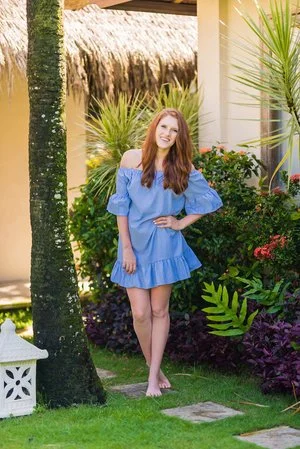
Say hello to Rachel, founder of Mindful Movement — a beach yoga experience designed to help people reconnect with their body, their breath, and the calming rhythm of the ocean through group classes, private sessions, and wellness retreats. None of it is real. But the brief behind it is treated exactly the way I'd treat a paying client's: business name, target audience, vibe, a Pinterest inspiration board, even pulled-together imagery — the same details I'd normally get from a real person, gathered on purpose so the project has something to actually respond to.
The brief itself comes straight from my Dream Client Booking Blueprint, a 5-day challenge built around exactly this idea — using a mock project to book real clients.
Starting with a template that already feels right
I picked the Amal template for its earthy tones, elegant font pairing, and a bit of a line-heavy design — a close match to Rachel's Pinterest board before a single edit was made. By the end, the site looks nothing like the original template, but starting from something already close in mood speeds up everything that follows.
Pulling a colour palette from the actual inspiration
Rachel's board was full of the same handful of tones repeating: sandy beiges, muted greens, earthy browns. Best practice is to build a full range from lightest to darkest rather than picking a few favourites, since Squarespace slots that range into your design far more smoothly when you give it room to work with.
Choosing fonts with a reason behind each one
The inspiration sites weren't leaning fully modern or fully traditional — they were mixing serif and sans-serif, so the site does too, landing on Orpheus Pro for paragraph text because it reads as elegant with a modern edge. One small habit worth stealing: leave text-transform set to "none" at the style-guide level, so you can choose capitalised, lowercase, or uppercase on a heading-by-heading basis as you actually build, instead of committing to one look for the whole site.
Letting the copy drive the layout, not the other way around
Once the styles were set, the build started from Rachel's copy document, working top to bottom and matching each block of text to a layout pulled from the inspiration board. Client copy and website best practice don't always agree — so the approach is to build the first draft using their words but with proper structure and SEO in mind, then explain the reasoning afterward. If they want it changed back, that's fine. If they don't, that's fine too.
Photo choices followed the same logic throughout: nothing too busy behind text, no text crossing someone's face, and alternating photo-and-text sections down the page so each block reads as distinct from the one before it rather than blurring together.
Turning the finished build into a portfolio piece
Once the page was done, the fastest way to get it portfolio-ready is a full-page screenshot using the free Chrome extension Go Full Page — one click captures every section of the page in a single image, ready to drop straight into a portfolio.
A gorgeous mock project is only half the plan — landing your first client with it is the other half, and that's exactly what comes next.
Watch this next:
- Web designers speak out: What I wish I knew about building my portfolio
- How I became a web designer with no prior experience
- The EASIEST way to land web design clients FAST
- 5 things you need in order to land your first web design client
- How to Get Web Design Clients by Making Friends — Not Cold Pitching